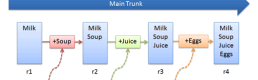
Matteo Pasquinelli’s presentation this Friday at The Society of the Query conference organized by the Institute of Network Cultures lead by Geert Lovink, was based on his paper, Google’s PageRank Algorithm: A Diagram of Cognitive Capitalism and the Rentier of the Common Intellect. The paper can be downloaded from his website.
The essay and presentation of the Italian…
The search market is a multi-billion dollar industry, and given such potential to capitalize there is a large window of opportunity with a vast range of possibilities for the future of search. The mythology of the search engine is that there is only one type of user and only one end-point for any given search. Matthew Fuller, author of a number of books on art, media and software, dismisses such narrow thinking by welcoming a cast of “alternative search engines” that offer some variety to the classic retrieval model of search.
Are we all just worker bees being exploited by Google for capitalistic means? What Google is selling is not an ordinary service, but a meta-service, one that depends on human contribution. Yann Moulier Boutang likens this human activity to that of the worker bee, and the economy of Google is dependent on the pollination of these bees.
‘[…] since information wants to be free, then so do the people who have it – setting the stage for a titanic political struggle between the last Soviet-style dictatorship in the world and the first Internet insurgency. Call it the Digital Revolution versus the Cuban Revolution’.[1]
I posted a 4-minute video which summarizes some of the main points from my thesis on the music industr(ies), “Copy What Can’t Be Sold; and Sell What Can’t Be Copied”.
The YouTube account stats under my profile badge now boast over 13,000 videos watched, but besides the occasional surfing squirrel, dramatic chipmunk (technically a prairie dog) or Dawkins diatribe, I spend most of my time on YouTube listening to music. Remixes, covers, mash-ups and live performances of some of my old favorites…
The “Accelerated Living conference” took place in Utrecht, last month, and it was part of the Impakt Festival 2009.
As the name may unveil, the conference theme was about the way we experience and how we approach time, speed and space from a number of perspectives given by the panel of speakers: John Tomlinson, Mike Crang, Carmen Leccardi,…
Last week I participated in the eComm conference (The Emerging Communications (eComm) Conference & Awards) in Amsterdam. Impressions? I’m impressed. For two reasons.
Firstly, I was impressed by the conference itself.
Reason 1
The organization was excellent. Moderation by Lee Dryburgh kept both speakers and audience (during question rounds) within…
Florian Brody is an internationally acclaimed digital media specialist with more than twenty years experience in electronic publishing in Europe and the U.S. He is the President of Brody Inc., a publishing company based in Los Angeles and Vienna that is dedicated to the emerging information society. With a background in linguistics and computer science, He teaches at…
Working on the Society of the Query conference, I often find myself confronted with an unquestioned believe in what are believed to be the empowering or even emancipating qualities of universally accessible open and free information. Michael Stevenson once referred to this believe as Information Determinism, as if information by itself will solve social and political issues. Realizing…