Monthly Archives: May 2010

Quit Facebook Day?

24000+ Facebook users have publicly committed to quit their accounts on “Quit Facebook Day”, the 31st of May. Thousands of users will revolt against Facebook and not just for the sake of their privacy. The campaigners, from Quitfacebookday.com, argue that Facebook doesn’t give their users fair choices to manage their data; the settings are too complex for the…


Libre Graphics Meeting: FLOSS Design Conference in Brussels (27-30 May 2010)

Tomorrow I will be attending the Libre Graphics Meeting in Brussels. This conference is both free as in beer and free as in relating to the best projects the free, libre, and open source communities have to offer in the realms of graphic and visual design (including typography). Generative design processes will also be duly discussed and represented.

See…


Information Visualization and Conflict

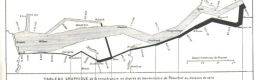
The visualization of information has long been a tool for generals and historians alike to go over military strategy and to materialize the concomitants of battle. As military operations continue within an increasingly data-rich environment, we must ask if more can’t be done to implement and improve upon the tools that may have the power to aid in…


Information Visualization & Charting The Beatles

Since I am a huge Beatles fan and I’m currently enrolled in the Information Visualization course I want to give this project some attention; Charting The Beatles, lead by graphic designer Michael Deal. This projects attempts visual analysis of various aspects of The Beatles’ extensive oeuvre, such as collaboration proportions in the group, references between songs, work schedules…


Play and learn

In this post I will try to describe the way videogames have helped pave the way for information visualization as a tool for digital native learners by consistently  tracking and visualizing achievements. I will also try to show how visualized information on academic achievement might aid learners in reflecting on their learning strategies. To…


Information Visualization and the Public Sphere

Democratization of Data

Open Data is a practice (and philosophy) of making data freely available to everyone. Advocates of Open Data argue that restrictions, licenses, copyright, patents, or other mechanisms of control are against the communal good and that data should be made available without restrictions or fees. Recently, governments have been making some of their data publicly available (

Performative practices of mapping

“Perhaps one of the most important characteristics of . . . [a] map [is that it] has multiple entryways as opposed to the tracing, which always goes back “to the same.” The map has to do with performance”. (Deleuze and Guattari 1980/1987, 13-14)

According to Crampton “cartography should be understood as existence (becoming) rather than essence (fixed ontology)” (Crampton, 2009)…


Visualizing for different purposes

In my previous blogpost, I finished with the statement that there are many other authors (besides Manuel Lima) that talk about artistic ways of information visualization and the distinctions these cultural practices have from traditional (conventional academic) information visualization. Kosara wrote the article ‘Visualization criticism – the missing link between information visualization and art.’ In this he introduces the notions of pragmatic and artistic visualization to delineate between two very different approaches within the general field of visualization.


Social Activism in the Amazon

Social activism is strong in Santarém, a city of nearly 300.000 habitants in the North of Brazil, the Amazon region. Mainly driven by a group of media activists, they aim at the appropriation of alternative technology throughout the Amazon.


The New Cartographers #1, Pedro M Cruz

Pedro M Cruz created recently a Project related with the visualization of Traffic in Lisbon. His project lets you see the city waking up through the motion of traffic on its main arteries and fading away towards the end of the day. It also shows you which are the streets with swifter traffic, green lines, and the ones with traffic…