Christopher Mead
|
05 October 2011, 12:56 am
|
tags: aesthetics, Android, Apple, behaviour, blackberry, danah boyd, features, frequency, interface, ios, Mobile technology, seesmic, sociology, technology, twidroid, twitter, twitter apps, wohn
The Question
Academic research on Twitter has been rife since it hit off in 2006, with significant focus on two topics in particular- that of privacy and identity. Much that has been written by scholars of Twitter has generally been cautious, negative (labeling privacy as a problem) or positive in the sense of data accumulation (i.e what can be inferred…
Originally published on the Video Vortex #6 conference blog
German filmmaker, media artist and activist Florian Schneider ambitiously set out to present a mission statement for a novel type of documentary, the open source mode, and launched into a highly theoretical and somewhat cryptic talk that contained a few guidelines on how this transition can be made, but lacked any clear examples or results.
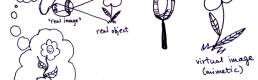
In The Virtual Window: From Alberti to Microsoft (2006, MIT Press), (the late) Anne Friedberg traces the history of the relationship between the window and the human experience, from the physical to metaphorical. She draws analogies between the figure of the framed window and the metaphysical framing of experience to provide an historical exegesis detailing the developments of (primarily Western) spectatorial experience in relation to how our perceptions of the world are structured.
Nicola Bozzi
|
07 September 2010, 2:32 pm
|
tags: aesthetics, ethics, format, infrastructure, interface, metadata, metaphysics, politics, strategy, tactics
This is the conclusion of my thesis From Metaphysics to Metadata. Aesthetics and Politics of Interface. Click to read the first, second, and third part.
ABSTRACT [Or download the full PDF: NicolaBozzi_MP2MD_Conclusion]
In the conclusion of my work I give a few examples of how new stereotypes can be created and spread…
Nicola Bozzi
|
06 September 2010, 2:27 pm
|
tags: aesthetics, body, comedian, gangster, hipster, infrastructure, interface, metadata, metaphysics, nerd, politics, scale, structural, textural
This is the third part of my thesis From Metaphysics to Metadata. Aesthetics and Politics of Interface. Check back to read the first part and the second part.
ABSTRACT [Or download the full PDF: NicolaBozzi_MP2MD_Figures]
In this chapter I define four main types of metadata and four stereotypical figures to exemplify each of them…
Nicola Bozzi
|
05 September 2010, 4:42 pm
|
tags: aesthetics, Alexander Galloway, Bas van Heur, David Harvey, Gilles Deleuze, heterotopia, infrastructure, interface, matteo pasquinelli, metadata, metaphysics, Michel Foucault, Pierre Levy, politics, protocol, XML
This is the second part of my thesis From Metaphysics to Metadata. Aesthetics and Politics of Interface. Here’s the first part.
ABSTRACT [Or download full PDF: NicolaBozzi_MP2MD_Channels]
Starting from the example of urban simulacra (in form of virtual environments, mapping applications, or augmented reality renderings), in this chapter I introduce how a virtual infrastructure actualizes into…
Starting from today, I will publish my thesis From Metaphysics to Metadata. Aesthetics and Politics of Interface on this blog. Since nobody wants to read some 70 pages in blog format, I’m attaching it in four separate PDFs introduced by as many short abstracts. So here it goes, I hope to receive some feedback.
INTRODUCTION – ABSTRACT [Download full PDF:…
Sander Leegwater
|
27 April 2010, 1:50 am
|
tags: aesthetics, cognition, data art, data visualization, external cognition, information art, information visualization, Representation, sublime, vernacular visualization
The definition by Card et. al. of information visualization as “the use of computer-supported, interactive, visual representations of abstract data to amplify cognition (1999),” is the basis for many. But there are also parties involved from outside the academic fields in the popularization of information visualization, as Viégas and Wattenberg write. Tag clouds for example go against certain theoretical design principles but still seem to work. Lima praises the way “they observed how the last couple of years have witnessed the tipping point of a field that used to be locked away in its academic vault, far from the public eye. The recent outburst of interest for information visualization caused a huge number of people to join in, particularly from the design and art community (2009),” resulting in the development of a multiplicity of projects.
Marc Stumpel
|
13 September 2009, 8:12 pm
|
tags: Acces, aesthetics, Analog, Bootleg, copyright, culture, Fair use, history, Preservation, video, youtube
In his latest book: Inherent Vice: Bootleg Histories of Videotape (2009) Lucas Hilderbrand explores the analog past of video nostalgically, and shows its importance and relevance to (new) media studies. Hilderbrand mainly focuses on the aesthetic, cultural and legal impact of the analog videotape era to create a refreshing view of the analog past’s heritage to the digital age.
The…