Tag Archives: collective intelligence

Collective intelligence: an interview with Pierre Levy

In a previous post I discussed and, hopefully, debunked some common assumptions on the next phase of the World Wide Web, or web 3.0. The general assumption is that in the 2.0 era the user was at the centre, the produser took control and the cult of the amateur was born. The web was being flooded with what seems…

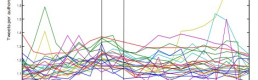
Research Twitter, Predict the Future

Twitter, for many critics, is seen as the platform on which a lot ‘irrelevant’ information, whether personal or not, is shared. Arguments of the presupposed irrelevance of Twitter are paralleled by critics who argue the possible predictive potential of Web 2.0 and social media in particular. My motivation of writing this post is that social media which is the product…

Twitter: immediacy and collective intelligence

When working on a Wikipedia entry just last week, I was confronted once again with the helplessness one might experience when the computer does not work properly or when the internet connection is down. Upon typing in the Wikipedia URL, nothing happened. I found myself staring at the blank page before me. What is one to do? I refreshed the…

INFORMATION VISUALISATION, SHARING THE STORY

No one knows everything, but everyone knows something, all knowledge resides in humanity[1]

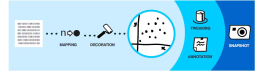
While the notion of collective intelligence –as coined by Pierre Lévy- has already been extensively discussed in regards to the collective phenomenon of Wikipedia, the current rise of the social use of information visualisations should also be seen in this perspective. While Pierre Lévy described how individual members of online communities combined their individual knowledge in order to create a shared expertise (collective intelligence),[2] he could not envision the collective use of data. The unanswered question posed by Lévy as to ‘…[how we will] be able to process enormous masses of data on interrelated problems within a changing environment?’[3] might have found its answer in the collective potential of information visualisations…

A Wiki Noob

Posting a new entry on Wikipedia is not very difficult, but keeping it online is an impossible mission. These were the first lines of this post when I started writing it a couple of weeks ago. By now I changed my mind… I did it! I have a post on Wikipedia!

The Anti-Googlization: How Alternative Search Engines Find Their Way on the Web

On the website googlizationofeverything.com, theorist Siva Vaidhyanathan states that the current web is dominated in several ways by search engine Google. Google related sites and ‘Googleware’ like Google Books and Google Earth and the video channel YouTube. In a lot of countries, Google is by far the most used search engine; in the Netherlands, Google…

Wikipedia: a Social Playground

The online encyclopedia Wikipedia is an interesting product of the Web 2.0. Wikipedia asks its users to actively participate, add and change the content of the website, in order to create a knowledge database which is more up to date and holds more information then any other encyclopedia in the world. Basically, Wikipedia employs a power to the people…

The Wiki Beehive

Generally Wikipedia is praised for it’s collective driven overload of information.

“Britannica’s biggest errors are of omission, not commission. It’s shallow in some categories and out of date in many others. And then there are the millions of entries that it simply doesn’t–and can’t, given its editorial process–have. But Wikipedia can scale to include those and many more. Today Wikipedia

Wikipedia changes our perception of knowledge

Wikipedia differs greatly with the traditional encyclopedia. Examples of aspects of differentiation:

· Broader public: knowledge is for everyone.
· Authority: everyone can write for Wikipedia.
· Broader range of subjects: everyone can decide what is important to be included in Wikipedia. There is no limit on the size of Wikipedia.

Wikipedia can be accessed by everyone who…

POLITICS: WEB 2.0 INTERNATIONAL CONFERENCE

Written for the Institute of Network Cultures
Crossposted at Institute of Network Cultures Weblog

Download PDF (full text including pictures)

On April 17th and 18th 2008 the department of Politics and International Relations at the Royal Holloway University of London (RHUL) organized Politics: Web 2.0: an international conference. The conference was large and diverse, with six distinguished keynotes,…